
REFLECT
Open source & open standards
Europe’s strategic lever for digital sovereignty
David O’Dwyer
Andreas Prins
Julian Hansert
At the European Resilience Summit in London, the panel discussion “Open Source & Open Standards: The Foundation of Digital Sovereignty” brought together industry leaders to examine one of the most critical building blocks of Europe’s digital future. Moderated by David O’Dwyer, the session explored the structural, financial, and geopolitical challenges that shape Europe’s position in the global technology landscape.
TEXT: SANDER HULSMAN IMAGES: EUROPEAN RESILIENCE SUMMIT
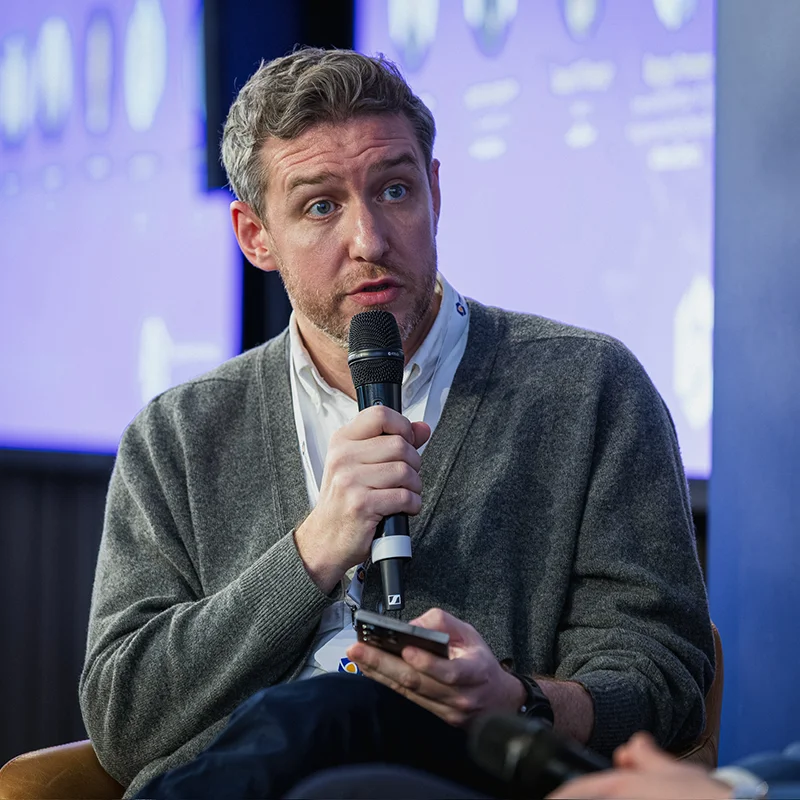
David O’Dwyer
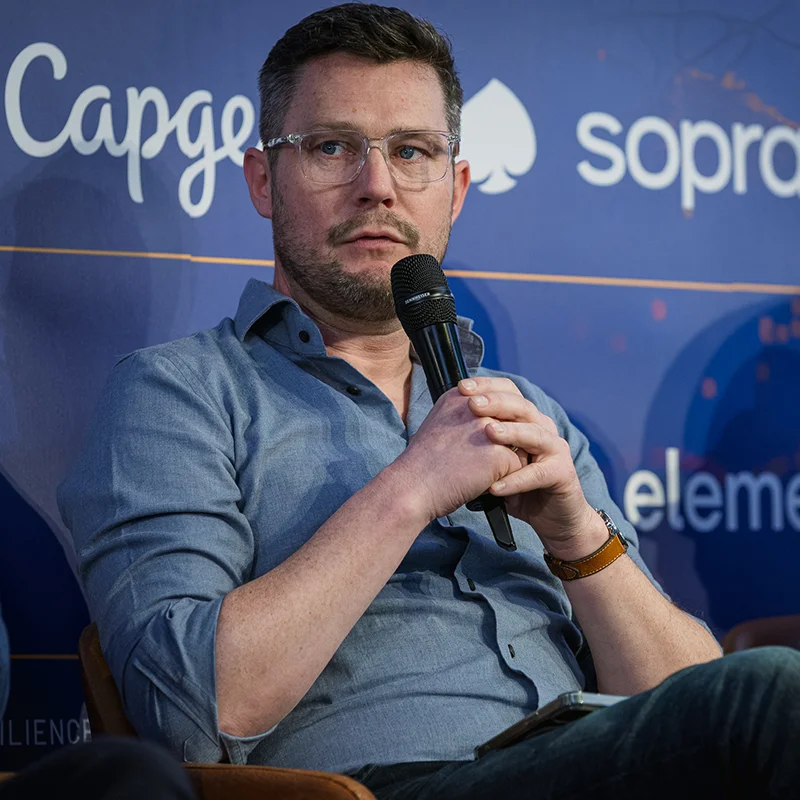
Andreas Prins
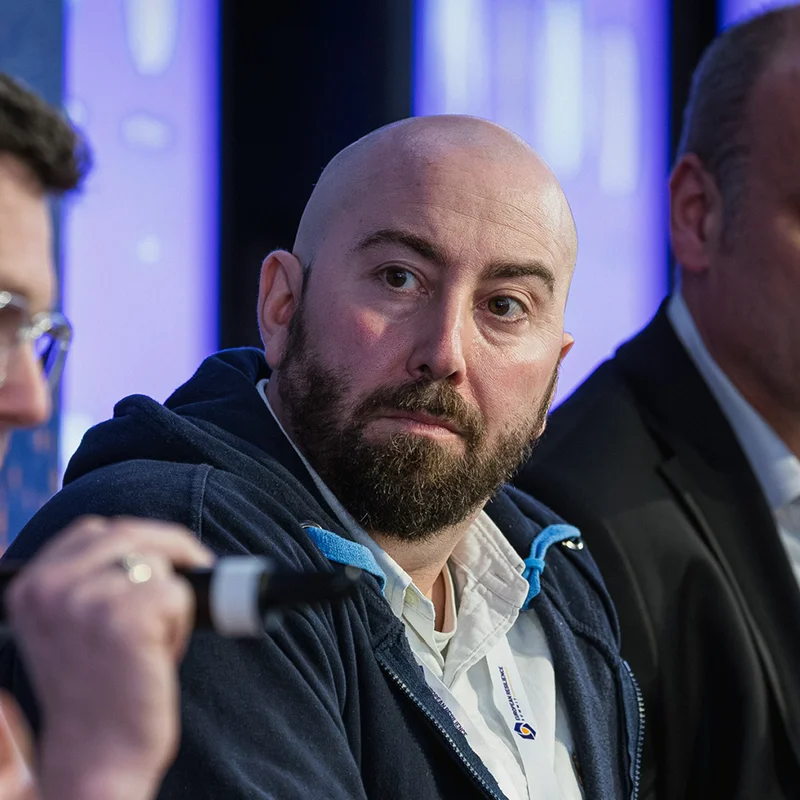
Julian Hansert
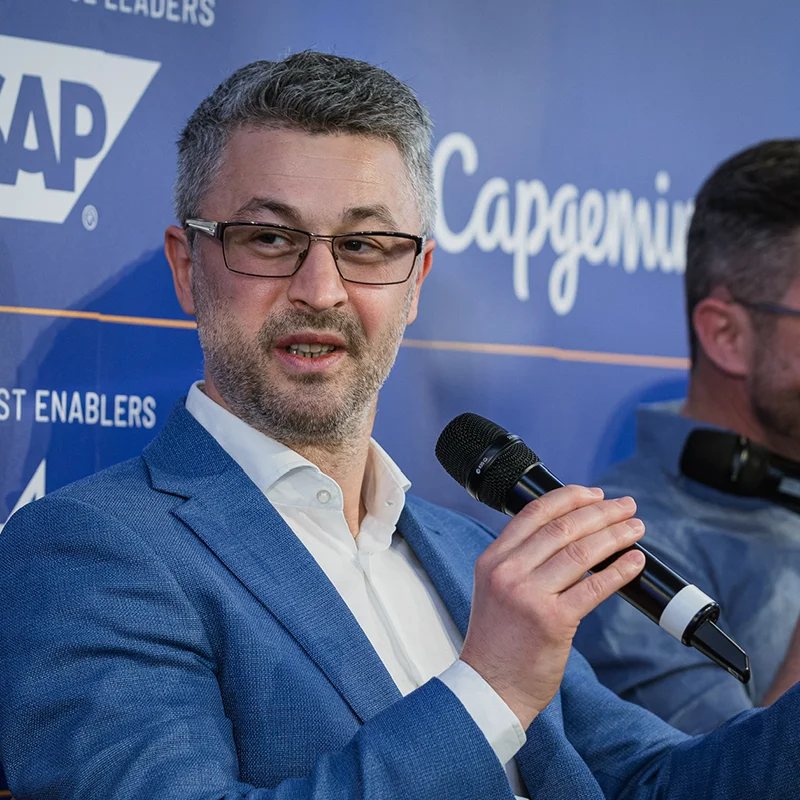
Sergiu Petean
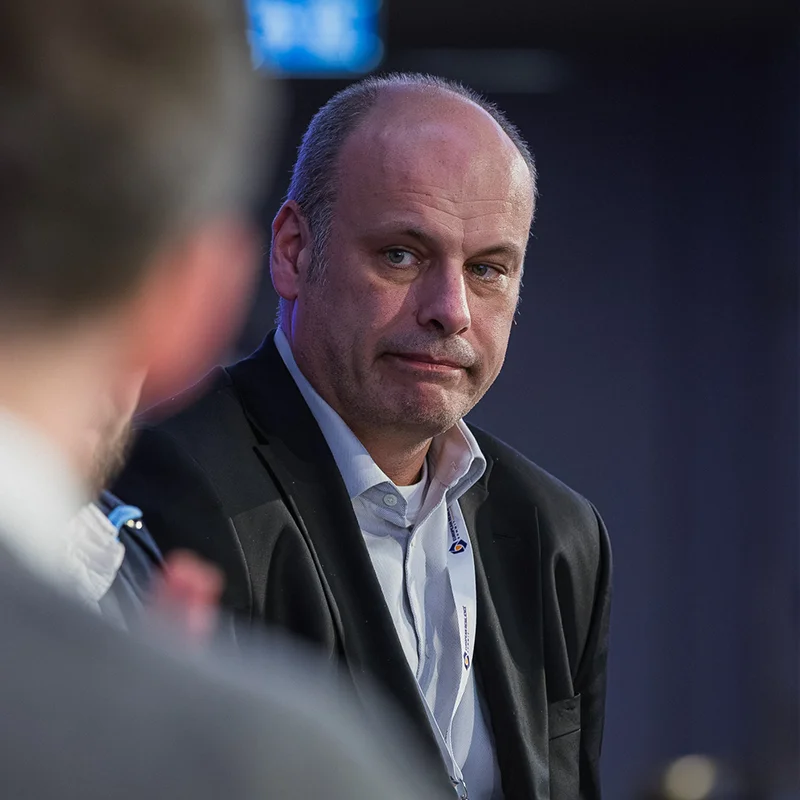
Stefan Zosel
While the opening segment set the stage, the discussion quickly converged on a central tension: Europe has the talent and technological capability, But lacks the systemic conditions to fully capitalize on them.
Talent without retention
A recurring theme was Europe’s inability to retain innovation and scale it domestically. Andreas Prins, Global Head Sovereign Solutions at SUSE, highlighted a fundamental imbalance: “We have the people, we have lots of technology… but when you want to raise money, 99 out of 100 conversations are outside the EU.”
This capital gap directly affects sovereignty. European startups often depend on non-European funding, which can ultimately shift ownership, control, and strategic direction abroad. Julian Hansert, Co-Founder & COO at Kubermatic, reinforced this concern: “Good news, we definitely have the engineers. Bad news, a lot of them are not hired by European companies, but others.”
The implication is clear: without a strong internal investment ecosystem, Europe risks becoming a talent exporter rather than a technology leader.
The public sector would rather pick a technology that’s established rather than jumping onto something new
Risk aversion and public sector inertia
Beyond funding, cultural and institutional dynamics play a major role. European public sector organizations tend to prioritize proven, established technologies over emerging open-source alternatives. As Prins noted: “We are risk-averse… the public sector would rather pick a technology that’s established rather than jumping onto something new.”
This conservatism slows adoption cycles and limits opportunities for European-grown innovation to scale, particularly in government and critical infrastructure, where sovereignty concerns are most acute.
From funding to functioning ecosystems
A key point of debate centered on the effectiveness of funding mechanisms. While initiatives such as sovereign tech funds and EU-backed programs exist, panelists argued that funding alone is insufficient. Stefan Zosel, Vice-President Global Cloud Lead Public Sector at Capgemini, challenged the prevailing model: “We should go away from this funding perspective… we need to create an economy where proper companies can deliver sustainable services around open source.”
Similarly, Sergiu Petean, Field CTO EMEA at Atlassian, emphasized the operational reality: “Funding is covering maybe 5% of the open source life… the real work is maintaining what you build.” This distinction is crucial. Open source is not just about creation, it is about long-term stewardship, support, and lifecycle management. Without sustainable business models, even well-funded projects can fail to deliver lasting value.
Building an LLM is extremely expensive… communities don’t have the resources to do it
Maintenance, support, and accountability
One of the most overlooked aspects of open source is long-term support. Enterprises and governments require guarantees, not just code. Prins illustrated this with a concrete example: “SUSE Linux is supported for 16 years… that’s really what you buy as assurance.”
This highlights a shift in perception: open source is not “free software,” but rather a foundation upon which commercial-grade services and accountability must be built. The absence of structured support models in public sector adoption remains a critical vulnerability, particularly when essential services rely on community-maintained tools without formal guarantees.
AI: next battleground for sovereignty
As the discussion turned to artificial intelligence, the stakes became even higher. AI is rapidly becoming the next foundational layer of digital infrastructure, raising urgent questions about openness, control, and dependency. Petean was blunt about the economic reality: “Building an LLM is extremely expensive… communities don’t have the resources to do it.”
This creates a structural disadvantage for open-source AI initiatives, particularly compared to hyperscalers with vast financial and computational resources. At the same time, concerns around transparency and ethics are intensifying. Zosel warned: “If AI makes automated decisions, we must understand what’s in the model… I don’t want decisions based on values that are not ours.”
This is where open standards, and potentially open models, become critical. However, the panel acknowledged that full openness in AI may not be feasible at scale. Instead, Prins pointed toward a more pragmatic direction: “We’ll see more domain-specific models… not as rich, but good enough for specific use cases.” This aligns with a broader European strategy: prioritizing controllable, transparent, and purpose-built AI systems over generalized, opaque mega-models.
95% of your supply chain is coming from open source… and yet you have no strategy to influence it
Geopolitical realities
The panel did not shy away from geopolitical realities. Europe is navigating a landscape dominated by two competing paradigms:
- The United States: largely proprietary, hyperscaler-driven ecosystems
- China: increasingly promoting open-source alternatives as a strategic lever
Hansert summarized Europe’s position starkly: “We’ve already lost the race… we can only try not to get totally lost.”
While pessimistic, this view underscores the urgency for Europe to define its own path; one rooted in sovereignty, interoperability, and resilience.
Open source as a sovereignty strategy
Despite the challenges, the panel converged on a clear conclusion: open source is not just a technical choice, it is a strategic imperative. Petean framed it in operational terms: “95% of your supply chain is coming from open source… and yet you have no strategy to influence it.”
This lack of strategy exposes organizations to risks in security, dependency, and control. One solution discussed was the establishment of Open Source Program Offices (OSPOs), enabling organizations to actively contribute to, and shape, the ecosystems they depend on.
Prins connected this to broader policy developments: “The EU Cloud Sovereignty Framework… basically points to open source as the way to increase sovereignty.” In parallel, increasing focus on software supply chain transparency, such as Software Bill of Materials (SBOMs), is expected to strengthen trust and accountability.
We should not separate into 27 member states… we are one European Union
Federated and collaborative future
Looking ahead, the panel emphasized the need for collaboration over fragmentation. Europe’s strength lies in its collective capability, but this is often diluted across national boundaries. Zosel concluded with a call for unity: “We should not separate into 27 member states… we are one European Union.”
Hansert added a technical dimension, pointing to standardization efforts: “Kubernetes… gives Europe the chance to collaborate on a common layer.” These shared platforms and standards could form the backbone of a federated European digital ecosystem. One that balances sovereignty with scalability.
From potential to execution
The discussion made one thing clear: Europe does not lack the ingredients for digital sovereignty. It has talent, technology, and a strong open-source foundation. What it lacks is alignment; between capital, policy, procurement, and long-term strategy.
Open source and open standards offer a viable path forward. But realizing their full potential requires a shift:
- From funding to sustainable ecosystems
- From consumption to contribution
- From fragmentation to collaboration
Only then can Europe move from being a participant in the global digital economy to a true architect of its own future. 
Sergiu Petean
Stefan Zosel
MENU
SHARE THIS ARTICLE
CONTENTS
01 DSR MAGAZINE
Edition 01 – April 2026
02 EDITOR’S NOTES
Table of contents & Colophon
04 Strategy
Why we founded the European Resilience Summit
05 Context
From London to Vienna
Reflect: European Resilience Summit London
07 Geopolitical disruption
Cyber threats in a geopolitically unstable world
08 Arctic sovereignty
Why Greenland matters
09 Doc-Reads
New operating model for European resilience
11 Open source & open standards
Europe’s strategic lever for digital sovereignty
12 Elected autocracy
Journalists on the frontlines of digital repression
14 Human resilience
The human dimension of resilience in Europe’s digital age
15 Wrap-up
The key takeaways from London
16 DSR Magazine
Subscribe and stay connected to Digital Sovereignty & Resilience
17 Policy analysis
Poland’s digital sovereignty push
18 Lessons learned
A sovereignty clash in the Netherlands
Foresight: European Resilience Summit Vienna
20 Event update
This is the programme and Advisory Board
21 CIO networks
From national models to a European CIO fabric
22 Interview
Austrian CIO Clemens Möslinger about digital resilience
23 ERS Vienna
Where decisions on resilience take shape
24 Public Service Media
When broadcasting becomes critical infrastructure
25 European Resilience Summit
Program for 2026 & 2027
26 Horizon
ERS: From dialogue to direction
27 ERS The Hague
Save the date: June 18 2026