European Resilience Summit (ERS) Vienna represents a deliberate inflection point in the European debate on digital sovereignty and resilience. It is not designed as a conventional technology summit, but as a governance-driven intervention into how Europe defines, organises, and operationalises its digital future. In that sense, ERS Vienna is less about showcasing innovation and more about structuring the conditions under which innovation can remain controllable, interoperable, and strategically aligned with European values and dependencies.
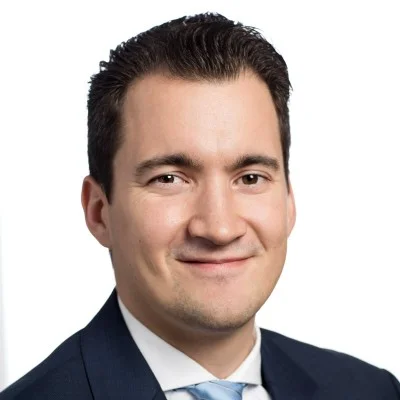
TEXT: SANDER HULSMAN IMAGE: VIECON David Faber
The European Resilience Summit series explicitly frames resilience as a systemic property rather than a technical feature. As the programme articulation across the series states, resilience is “more than defence, it is the foundation of Europe’s digital independence.” Within that framing, Vienna becomes a governance anchor point: a moment where fragmentation in policy, procurement, infrastructure design, and operational accountability is confronted in a structured, cross-sector environment.
ERS Vienna is built around a simple but demanding premise: governance is not a layer on top of digital systems; it is the system itself. This shifts the role of the summit away from dialogue-only formats toward what can best be described as “decision architecture development”.
The advisory structure of ERS Vienna reflects this shift. Rather than serving as a ceremonial body, the advisory ecosystem functions as a multi-level translation mechanism between political ambition, institutional constraints, and operational execution. It connects three domains:
Across the broader ERS programme, this alignment mechanism is consistently emphasised: resilience is not achieved through isolated decisions, but through coordinated governance across sectors, borders, and supply chains. Vienna is therefore positioned as a consolidation moment: a place where governance fragmentation is not only diagnosed, but structurally addressed.
Europe has strong institutional capacity, advanced regulatory frameworks, and globally respected cybersecurity expertise
The European digital ecosystem is characterised by a paradox. On one hand, Europe has strong institutional capacity, advanced regulatory frameworks, and globally respected cybersecurity expertise. On the other hand, its operational digital infrastructure remains highly fragmented across national boundaries, sectoral domains, and vendor ecosystems.
This fragmentation produces five recurring structural tensions that ERS Vienna explicitly needs to address:
Vienna occupies a unique role. It is positioned as a synthesis moment between strategic intent and operational execution
A defining characteristic of ERS Vienna is its ambition to move beyond conceptual debate. The programme is explicitly designed to translate high-level sovereignty discussions into governance instruments that can be implemented.
This includes a focus on:
Tuesday, May 12, 2026
9:30 – 9:45 am
- Welcome & Opening: From London to Vienna
Philipp Müller & Clemens Möslinger9:45 – 10:15 am
- From Cells to Command: Rethinking Resilience Across Domains
Markus Schmid & Wolfram Weckwerth10:15 – 10:45 am
- Coffee Break
10:50 –11:20 am
- The Architecture of Autonomy: From Political Vision to Infrastructure Reality
Panel with Ron De Jonge, Clara Neppel, Manuel Muñiz & Götz T. Wiese
- Turning Commitment into Action: A Leadership Dialogue on Resilience
David Blum & Anton Sepper
- Doc-Read by Facis
Emma Wehrwein, Lauresha Toska & Andreas Weiss11:25 – 11:55 am
- Shaping Europe’s Cybersecurity Future: A Conversation with ENISA
Hans de Vries
- Measure your Sovereignty Level in 30 Minutes
Emiel Brok
- Doc-Read by Facis
Emma Wehrwein, Lauresha Toska & Andreas Weiss12:00 – 13:00 pm
- Lunch Break
1:05 – 1:35 pm
- Resilience Rewired: Power, Risk, and Europe’s Next Frontier
Panel with Clemens Möslinger, Alexander Pröll, Jörg Leitchtfried & Hans de Vries1:40 – 2:10 pm
- Digital Sovereignty: Why Public Service Media Are Europe’s Hidden Pillar of Cyber Resilience
Panel with Astrid Zöchling, Harald Kräuter, Antonio Arcidiacono, Robin Nachtrab-Ribback & Deividas Graubaskas
- Building Resilience by Design: Digital Infrastructure, Recovery, and Human Values
Clara Neppel & Jutta Juliane Meier
- Does FOSS Buy Sovereignty? Participation vs. Ownership
Mirko Boehm2:15 – 2:45 pm
- When the Grid Goes Down: Cascading Failure Scenario That Europe Industrial Security Is Not Ready for
Panel with Martin Madlo, Heinz Nusser, Gernot Frauscher & Ralph Sieffen
- Doc-Read by Sopra Steria
Ulf Glöckner
- Leading EU Cybersecurity: ENISA in Conversation
Hans de Vries & Arno Spiegel2:50 – 3:20 pm
- Coffee Break
3:30 – 4:00 pm
- Open Source as Strategic Infrastructure: Enabling a Federated, Sovereign Digital Europe
Panel with Per Krogslund, Mirko Böhm, Emma Wehrwein & Emiel Brok
- Doc-Read by Sopra Steria
Ulf Glöckner
- Doc-Read by Capgemini
Manuel Höferlin4:05 – 4:35 pm
- From Dependency to Architecture: Designing European Resilience as a Core Political Responsibility
Panel with Simona Milio, Sofie Schönborn, Ulf Glöckner & Astor Nummelin Carlberg
- Doc-Read by Capgemini
Manuel Höferlin5:10 – 6:00 pm
- Networking Drinks
The European Resilience Summit in Vienna is supported by an Advisory Board composed of senior policymakers, government representatives, industry leaders, and domain experts operating at the intersection of digital infrastructure, governance, and security. Notably, the board includes a strong representation from the public sector, reflecting the central role of governments in shaping Europe’s digital resilience and sovereignty agenda.
Aligned with the summit’s theme, “Where governance becomes infrastructure”, the Advisory Board provides strategic direction on how policy frameworks, technological capabilities, and operational resilience increasingly converge. Drawing on cross-sector expertise, the board helps ensure that the summit’s discussions are grounded in real-world challenges and translate into concrete, actionable outcomes for Europe’s digital future.
Philipp Amann
Head of Digital Security Division, European Central Bank
David Blum
Defense & Security Lead, Accenture
Johannes Göllner
Chairman of the Board, Centre for Risk and Crisis Management
Klemens Himpele
Chief ICT Strategist, City of Vienna
Manuel Höferlin
Vice President, Digital Strategy & Resilience, Capgemini
Stephanie Jakoubi
Director of Strategic Partner Management, Communications & Events, SBA Research
Ronald de Jonge
Head of Public Sector and Defense & Security, Sopra Steria
Martin Madlo
Managing Director Austria, CTS Group
Clemens Möslinger
CIO, Austrian Federal Chancellery
Dr. Philipp Müller
VP Public Sector, DriveLock
Hannes Pfneiszl
General Manager, SoftwareONE Austria
Peter Reichstädter
CIO / Head of ICT Strategy Department, Austrian Parliament / Parliamentary Administration
Stephan Rodler
Head of IT, Austrian Court of Audit
Wolfgang Rosenkranz
Team Lead, CERT.at & Austrian Energy CERT
Benedikt Schraik
CTO, City of Vienna
Arno Spiegel
Deputy Director Cyber Security, Austrian Federal Chancellery
Katharina M. Schwarz
Head of Global Communications, Myra Security
Andreas Weiss
Managing Director, eco
Astrid Zöchling
CIO, ORF
If reduced to its core agenda, ERS Vienna is expected to confront five foundational questions:
ERS Vienna does not aim to resolve these questions definitively. Its function is more structural: to ensure that they are no longer addressed in isolation. In that sense, governance does not merely participate in ERS Vienna. Governance is what ERS Vienna is designed to activate.
01 DSR MAGAZINE
Edition 01 – April 2026
02 EDITOR’S NOTES
Table of contents & Colophon
04 Strategy
Why we founded the European Resilience Summit
05 Context
From London to Vienna
07 Geopolitical disruption
Cyber threats in a geopolitically unstable world
08 Arctic sovereignty
Why Greenland matters
09 Doc-Reads
New operating model for European resilience
11 Open source & open standards
Europe’s strategic lever for digital sovereignty
12 Elected autocracy
Journalists on the frontlines of digital repression
14 Human resilience
The human dimension of resilience in Europe’s digital age
15 Wrap-up
The key takeaways from London
16 DSR Magazine
Subscribe and stay connected to Digital Sovereignty & Resilience
17 Policy analysis
Poland’s digital sovereignty push
18 Lessons learned
A sovereignty clash in the Netherlands
20 Event update
This is the programme and Advisory Board
21 CIO networks
From national models to a European CIO fabric
22 Interview
Austrian CIO Clemens Möslinger about digital resilience
23 ERS Vienna
Where decisions on resilience take shape
24 Public Service Media
When broadcasting becomes critical infrastructure
25 European Resilience Summit
Program for 2026 & 2027
26 Horizon
ERS: From dialogue to direction
27 ERS The Hague
Save the date: June 18 2026