
Resilience is often framed as a technical challenge, a question of infrastructure, systems, and security. But that perspective is increasingly insufficient. As Europe navigates a rapidly evolving technological and geopolitical landscape, resilience is being redefined as a fundamentally human-centered concept, shaped by long-term thinking, governance, and societal values.
TEXT: SANDER HULSMAN IMAGES: EUROPEAN RESILIENCE SUMMIT / ENVATO
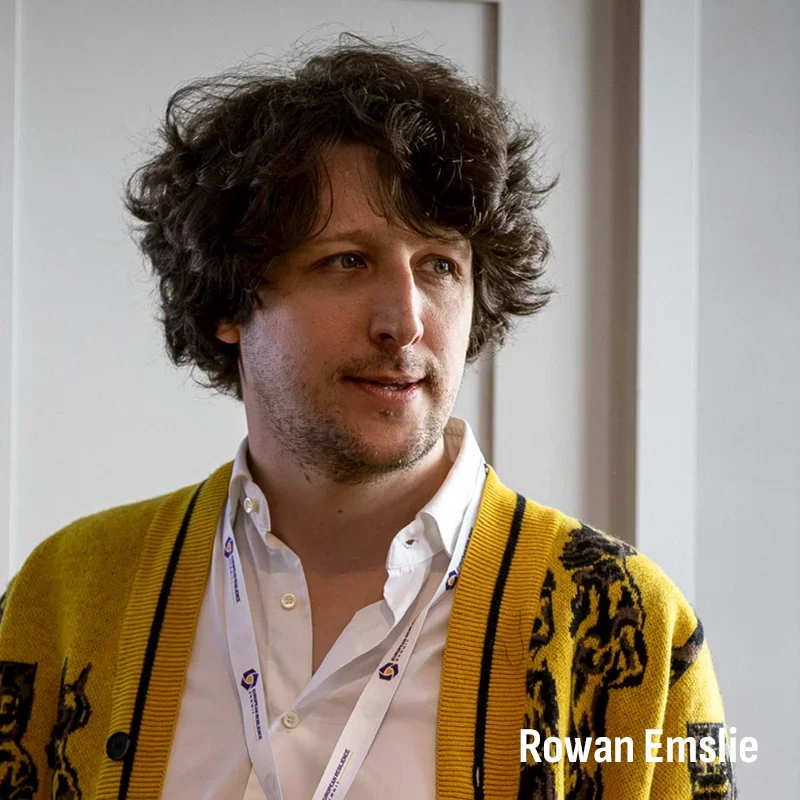
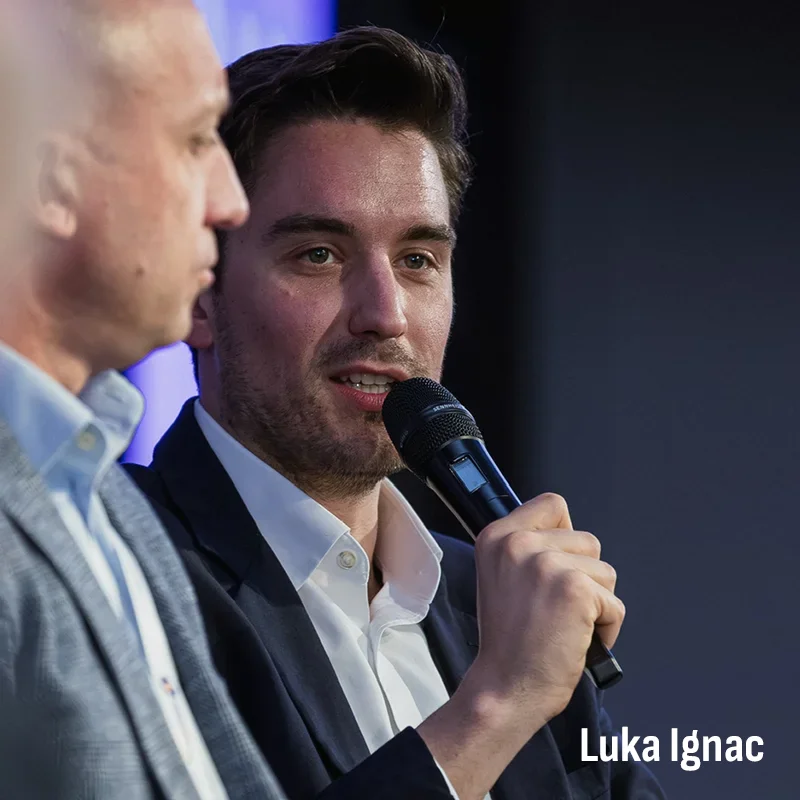
At the Centre for Future Generations (CFG), an independent think-and-do tank created to help policymakers anticipate and govern powerful, emerging technologies, this shift is clear. Both Rowan Emslie (Chief Communications Officer) and Luka Ignac (Advanced AI Policy Officer) argue for a broader interpretation: one where humans are not at the periphery of resilience, but at its forefront. Their perspectives were also reflected in the programme of the European Resilience Summit in London, where Rowan Emslie delivered the keynote “Why digital sovereignty demands intergenerational thinking”, and Luka Ignac contributed to the panel discussion “Resilience on the global scale.”
The dominant narrative around resilience has long focused on systems: how to secure them, scale them, and restore them after disruption. But according to Rowan Emslie, this approach is inherently reactive. “The biggest challenge is the growing distance between the speed at which powerful technologies are scaling and the speed at which governance is able to move. We keep finding ourselves writing the rules for the last disruption.”

This gap highlights a structural weakness in how resilience is approached. If institutions are constantly responding to past crises, they fail to prepare for future ones. The result is a model centered on risk management, rather than anticipation and human impact.
“Until we embed anticipatory governance into policymaking as standard, all our energy goes to risk management”, according to Emslie. “And we never get to the interesting question, which is how these technologies actually help people.” This reframing is critical. It positions resilience not as a defensive mechanism, but as a forward-looking capability, grounded in human outcomes.
A key pillar in this shift is intergenerational thinking; the idea that resilience must be designed not only for immediate stability, but for long-term societal continuity. Rather than optimizing for short-term efficiency or political cycles, institutions must develop the capacity to “think around corners”, anticipating second- and third-order effects of technological change.
Emslie: “Build foresight capacity into everything. Not as a nice-to-have annex that sits on someone’s desk, but as a core institutional muscle.” This approach aligns closely with the concept of digital humanism, where technology is evaluated not just on performance, but on its alignment with human values and future societal impact.
Here, resilience becomes a question of governance maturity: can institutions continuously adapt their decision-making in line with evolving realities?
Where Emslie emphasizes governance and foresight, Luka Ignac adds another critical dimension: resilience as a political and systemic challenge, not merely a technical one. “We don’t think about resilience only as a technical property, but also as a political one.”
From a geopolitical perspective, digital systems are deeply intertwined with global dependencies. Conflicts, trade dynamics, and infrastructure vulnerabilities all directly affect the stability of digital environments.
Ignac points to the interconnected nature of today’s world, where disruptions in one region can cascade across continents through digital and physical infrastructure. “We really live in an interconnected environment. A crisis in one region doesn’t stay there; it affects our economies, our data flows, and our digital infrastructure.”
This underscores a crucial insight: resilience cannot be achieved in isolation. It requires collective awareness of dependencies, as well as coordinated action across borders.
In European policy debates, resilience is often conflated with strategic autonomy; the ambition to reduce dependency on external actors. But Ignac warns against oversimplifying this into a narrative of isolation. “It often becomes a conversation about doing things on our own, instead of thinking about what options we can build together.”
This is particularly relevant in the context of global technology ecosystems. Attempts to fully decouple from dominant players, such as hyperscalers, are not only unrealistic but potentially counterproductive.
Instead, resilience should be understood as the ability to operate under stress while maintaining decision-making capacity. This is a definition that inherently requires collaboration. Ignac: “There is a way to work with partners, including the private sector and the United States, to build resilience in the real sense of the word: the ability to function under pressure.”
We don’t really map risks comprehensively across the board. We treat it as an IT exercise, instead of something much broader
Luka Ignac
A recurring theme in Ignac’s analysis is the need for comprehensive dependency mapping. While organizations often assess risks within their own boundaries, systemic vulnerabilities remain insufficiently understood. “We don’t really map risks comprehensively across the board. We treat it as an IT exercise, instead of something much broader.”
This limitation is critical. Without a clear understanding of where dependencies lie, in supply chains, infrastructure, or data flows, resilience strategies remain incomplete. At the same time, physical infrastructure continues to play a foundational role. Investments in elements such as subsea cables, which carry the vast majority of global data traffic, illustrate how resilience is anchored in both digital and material realities.
While much attention is given to technological solutions, Emslie shifts the focus to a less tangible but more decisive factor: institutional capacity. “The critical infrastructure isn’t any single gadget or sector. It’s the institutional capacity to keep making those choices well as conditions change.”
This perspective reframes resilience as a function of governance quality. The ability to make informed, timely, and value-driven decisions becomes the cornerstone of long-term stability. Europe, in this regard, holds a unique position. “Collective rulemaking at scale is something the EU does better than almost anyone on the planet. That’s not a small thing.”
However, this strength is undermined by a persistent challenge: the gap between legislation and implementation. “The clearest gap is between legislation and implementation, what we call the enforcement gap”, mentions Emslie. “Closing it would do more for digital resilience than any new law.”
Taken together, these perspectives point to a fundamental shift in how resilience should be understood and operationalized in Europe. It is no longer sufficient to build stronger systems. The real challenge lies in building stronger human and institutional capabilities; the ability to anticipate, adapt, and act in alignment with long-term societal goals.
This is what defines the human way in resilience:
In that sense, resilience becomes less about surviving disruption, and more about shaping the conditions under which societies can continue to thrive across generations. ![]()
01 DSR MAGAZINE
Edition 01 – April 2026
02 EDITOR’S NOTES
Table of contents & Colophon
04 Strategy
Why we founded the European Resilience Summit
05 Context
From London to Vienna
07 Geopolitical disruption
Cyber threats in a geopolitically unstable world
08 Arctic sovereignty
Why Greenland matters
09 Doc-Reads
New operating model for European resilience
11 Open source & open standards
Europe’s strategic lever for digital sovereignty
12 Elected autocracy
Journalists on the frontlines of digital repression
14 Human resilience
The human dimension of resilience in Europe’s digital age
15 Wrap-up
The key takeaways from London
16 DSR Magazine
Subscribe and stay connected to Digital Sovereignty & Resilience
17 Policy analysis
Poland’s digital sovereignty push
18 Lessons learned
A sovereignty clash in the Netherlands
20 Event update
This is the programme and Advisory Board
21 CIO networks
From national models to a European CIO fabric
22 Interview
Austrian CIO Clemens Möslinger about digital resilience
23 ERS Vienna
Where decisions on resilience take shape
24 Public Service Media
When broadcasting becomes critical infrastructure
25 European Resilience Summit
Program for 2026 & 2027
26 Horizon
ERS: From dialogue to direction
27 ERS The Hague
Save the date: June 18 2026